Animated Video Creation

Animated Video Creation Where the Script Does the Explaining

Most disappointing explainer videos are well-animated bad scripts. The illustration is polished, the transitions are smooth, and the viewer finishes still unclear about what the product does. BrandReturns treats the script as the deliverable and the animation as how it is delivered — locked in stages so changes happen while they are still cheap, built from your brand rather than a template pack, and constructed in modular scenes so the film can be updated and localized instead of remade.

Tell us what has to be understood and by whom. We will tell you whether animation is the right medium, which style fits, and what it realistically costs.

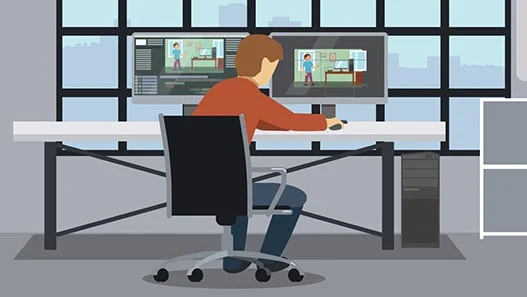
Animated Video Creation visual
logo img
logo img
logo img
logo img
logo img
logo img
logo img
logo img
logo img
logo img
logo img
logo img
logo img
logo img
logo img
logo img
logo img
logo img
logo img
logo img
logo img
logo img
logo img
logo img
logo img
logo img
logo img
logo img
logo img
logo img
logo img
logo img
logo img
logo img
logo img
logo img
logo img
logo img
logo img
logo img

Animation Gets Chosen for the Wrong Reason and Changed at the Wrong Time

01

The video is beautiful and the product is still unclear.

Every frame is considered, the pacing is smooth, and a viewer who watches it through cannot describe what you sell. The script was approved in a meeting where nobody read it aloud.
02

Changes were requested after animation began, and the quote doubled.

In filmed production, an additional shot costs a day. In animation, a changed scene means re-illustrating, re-animating and re-timing work that was built to fit around it — and the client was never told that the cost curve behaves this way.
03

Animation turned out not to be the cheaper option.

Chosen to avoid the logistics of a shoot, then priced by complexity and duration rather than by convenience, and delivered over four months.
04

It looks like everyone else's video.

The same flat illustration style, the same generic characters, the same stock transitions — recognizable as a template purchased rather than a brand expressed.
05

A feature changed and the whole video is now wrong.

Built as one continuous piece rather than as replaceable scenes, so a small product update requires a substantial reproduction.
06

The second video cost the same as the first.

No reusable asset library, no motion guidelines, no established style system — so every project started from an empty canvas.
07

The other language versions never happened.

Text baked into the animation, voiceover timing locked to English pacing, no subtitle-ready export — turning a straightforward localization into a rebuild.
08

Character animation was quoted when motion graphics would have done the job.

A style selected for how it looked in a showreel rather than for what the message required, at several times the necessary cost.
09

The voiceover undermines it.

Correct words, wrong delivery — too fast for comprehension, wrong register for the audience, or a read that makes a serious product sound like an advertisement.

20+

Years of experience

5

Global Locations

300+

Active Clients

2%

Top HubSpot Partners Globally

100+

In-house Digital Marketing Specialists

Lock Early, Because Change Gets Expensive Quickly

01

We will tell you when animation is the wrong medium.

Animation earns its cost when the subject cannot be filmed — software that does not exist yet, an internal process, an abstract financial product, a chemical or biological mechanism, data, a future state, or a procedure too dangerous or too small to capture. Where the subject can simply be shown, filmed footage from corporate video production or the wider video marketing services programme is usually faster, cheaper and more credible. That assessment happens before we quote.
02

The script is the product.

Comprehension is what an explainer is bought for, and it is decided almost entirely by the order the ideas are introduced, the assumptions made about what the viewer already knows, and how much is left out. We write to be understood, test the script by reading it aloud at pace, and hold it to the standard that someone unfamiliar with your business can restate what you do afterward.
03

Each stage locks before the next begins, and we explain why.

The cost of change in animation rises steeply and irreversibly: a script revision is free, a storyboard revision is inexpensive, a change after animation has begun is a partial rebuild. We make the sequence explicit at the outset so nobody is surprised by a change quotation, and we build enough review into the cheap stages that the expensive ones do not need it.
04

The animatic is the last inexpensive moment to change anything.

A timed sequence with scratch voiceover and rough visuals showing the entire film before production begins. It is the single most useful review point in the process and the one clients most often want to skip.
05

Style is chosen against the message and the budget.

Motion graphics, kinetic typography, illustrated 2D, character animation, isometric, three-dimensional product visualization or a hybrid with screen capture — each carries very different production costs and suits different subjects. We recommend the least expensive style that does the job properly rather than the most impressive one available.
06

The visual language is built from your brand.

Colour, typography, illustration approach and motion behaviour derived from your identity, so the result belongs to you rather than being recognizable as a widely-used template.
07

Scenes are built to be replaced.

Modular construction, separated text and voice layers and organized project files, so a changed feature, statistic or name becomes an amendment rather than a new production. Animated explainers are used for years, and building for that is a decision made in stage one.
08

Localization is designed in from the beginning.

Text kept out of baked artwork where possible, timing built with room for languages that run longer, subtitle-ready exports and separated audio stems. Animation localizes far more cheaply than filmed content — the visuals stay, only voice and text change — and that advantage disappears entirely if the film was not built for it.
09

Voice and sound carry more of the result than clients expect.

Casting for register and pace rather than for polish, direction toward comprehension, and sound design that supports the explanation instead of decorating it.
10

On AI in animation.

We use it for ideation, reference generation, rough boarding and iteration on style exploration. We do not present generated output as bespoke animation, and we do not use it where a client is paying for original illustration and design. Where it forms part of a delivered asset, we say so.

Not sure whether animation is even the right medium?

Request an Animation Consultation and we'll tell you whether animation is right, which style fits, and what it realistically costs.

Request an Animation Consultation

The Components of an Animation Engagement

1

Concept, Script & Message Clarity

Problem definition, audience assumptions, message hierarchy, and a script written for comprehension at spoken pace — with the deliberate decision about what to leave out. Includes read-aloud testing and, where the audience is unfamiliar, comprehension checking before any visual work begins.
Influences
understanding completion rate conversion the entire value of the video
2

Storyboard, Style Frames & Animatic

Scene-by-scene visual planning, style frames establishing the visual direction in your brand language, and a timed animatic with scratch voiceover showing the complete film before animation starts. These three stages are where a video is actually made; the animation phase executes decisions already taken.
Influences
production efficiency change cost stakeholder confidence final quality
3

Motion Graphics & Explainer Animation

Two-dimensional motion design, kinetic typography, iconography and illustrated explainer animation — the most cost-effective animation style and the right choice for the majority of product, service and process explanation, including the explainers embedded on website content creation pages where decisions actually happen.
Influences
comprehension conversion production cost turnaround speed
4

Character Animation & Illustrated Storytelling

Custom character design and animation, narrative-led films and scenario storytelling, for subjects where a human situation carries the message more effectively than diagrams — training scenarios, service journeys, brand stories and emotive communication.
Influences
emotional engagement memorability brand distinctiveness audience connection
5

3D Animation, Product Visualization & Technical Explanation

Three-dimensional product rendering, exploded views and cutaways, mechanism and process visualization, medical and scientific animation, and architectural or infrastructure visualization. The category for showing what physically exists but cannot be filmed — internal mechanisms, microscopic processes, products still in development.
Influences
technical comprehension sales support tender submissions product launch capability
6

Data Visualization & Infographic Animation

Animated charts, statistics, comparisons and report content, built so that the data is understood rather than merely displayed. Suited to results communication, research findings, market education and annual reporting.
Influences
comprehension of complex information credibility shareability stakeholder communication
7

Voiceover, Sound Design & Music

Voice casting and direction across languages and registers, recording and editing, sound design, music selection or composition, and mixing. Delivered with separated stems so that language versions and future edits do not require re-recording everything.
Influences
comprehension tone perceived quality localization cost
8

Localization, Versioning & Accessibility

Language versions with re-recorded or subtitled audio, adapted on-screen text, timing adjustments for languages that run longer, alternative durations and formats, captions, and accessible variants including described audio where required — plus the short cut-downs that feed social media content creation once the master exists.
Influences
market reach workforce coverage accessibility compliance cost per additional market
9

Animation Systems, Asset Libraries & Motion Guidelines

The reusable layer: illustration and character libraries, motion behaviour guidelines, template scenes, transitions and brand animation standards — built to sit alongside your wider brand strategy and identity — so that the second and third videos cost meaningfully less than the first and remain visually consistent with it.
Influences
cost of future videos brand consistency production speed internal capability

The Locked Sequence

01 — Clarify
  • 1 What must be understood, by whom, what they already know
  • 2 Honest assessment of medium and style fit
02 — Script
  • 1 Written, reviewed, read aloud at delivery pace
  • 2 Then locked — the cheapest stage to change
03 — Storyboard
  • 1 Scene-by-scene visual planning against the locked script
  • 2 Reviewed and locked before style development
04 — Style
  • 1 Style frames in your brand language
  • 2 Colour, illustration, typography, motion — locked before animation
05 — Animatic
  • 1 Full film assembled in timed rough form with scratch voiceover
  • 2 Last stage where structural change is inexpensive
06 — Animate
  • 1 Production against locked decisions
  • 2 Modular scenes, separated text and voice layers
07 — Score
  • 1 Voiceover recording and direction
  • 2 Sound design, music and mix — delivered as separated stems
08 — Version
  • 1 Language versions, alternative lengths and formats
  • 2 Captions, subtitle files, accessible variants
09 — Systemize
  • 1 Asset library, motion guidelines, template scenes
  • 2 Documented and handed over for the next production

Change policy: revisions within each stage are included to an agreed number of rounds. Requests that reopen a locked stage are quoted before proceeding, with the cost implication explained rather than absorbed silently and invoiced later.

Changing something after animation has already begun?

Talk to an Animation Producer about what stage that change actually falls in and what it will cost.

Talk to an Animation Producer

We Will Recommend Filming It Instead

01

The medium assessment comes before the quote.

Where the subject can be filmed, we say so. Animation is expensive for the wrong problems and we would rather lose the animation project and deliver the right one.
02

The script is written to be understood, not admired.

Read aloud at pace and tested against someone unfamiliar with your business, because a viewer who cannot restate your proposition afterward received nothing regardless of how the film looked.
03

The cost curve is explained at the start.

You are told which stages are cheap to change and which are not, so the locking sequence is a shared decision rather than a policy discovered when a change request is quoted.
04

The animatic is never skipped.

Seeing the complete film in rough form before production is the most valuable review in the process, and it prevents almost every expensive late change.
05

Style selected on requirement, not on showreel.

We will quote motion graphics where motion graphics does the job, even where character animation would be a larger project.
06

Built from your brand.

Illustration, colour, typography and motion derived from your identity rather than from a stock style everyone recognizes.
07

Modular construction as standard.

Replaceable scenes and separated layers, so product changes and personnel changes become amendments rather than reproductions.
08

Localization planned from stage one.

Text kept out of baked artwork, timing built with expansion room, and separated audio — so the fifth language costs a fraction of the first video.
09

Full ownership.

Project files, illustration and character assets, source files, voiceover stems, music licences, subtitle files and the asset library belong to you and transfer with you.

Where Animation Does What Filming Cannot

Technology and SaaS

Software explanation, feature demonstration for products still in development, abstract system architecture, and onboarding content that stays accurate as the interface evolves.

Healthcare, Pharmaceutical and Medical Devices

Mechanism of action, physiological and cellular processes, device operation and surgical procedure explanation — subjects that are microscopic, internal or impossible to film, produced under scientific and regulatory review.

Financial Services and Fintech

Products with no physical form — insurance structures, investment mechanics, payment flows, regulatory concepts — where animation makes an abstract offering comprehensible without overstating it.

Manufacturing and Engineering

Cutaways, exploded views, assembly and process visualization, and product demonstration before physical prototypes exist or where equipment cannot be safely filmed in operation.

Energy, Utilities and Infrastructure

Network and system explanation, project visualization, safety procedure communication, and public or stakeholder education about work that is underground, hazardous or not yet built.

Education and E-Learning

Concept explanation, curriculum content and scenario-based learning, built modularly so courses can be updated section by section.

Public Sector and Non-Profit

Policy and entitlement explanation in plain language, service navigation, and awareness communication with accessibility obligations that are legally binding.

Professional Services

Process and methodology explanation, and the visualization of intangible work — the category where prospects most often cannot picture what they would actually be buying.

Whether the Viewer Can Explain It Afterwards

01

Comprehension outcomes

  • Whether viewers can restate the proposition or process after watching, tested directly rather than assumed
  • Reduction in repeated questions to sales, support or training teams on the topic the video covers
  • Assessment or knowledge-check performance where the video forms part of training
02

Commercial outcomes

  • Conversion rate on pages carrying the explainer, measured against the same pages without it
  • Demo, trial or enquiry volume attributable to the asset
  • Sales cycle effect and usage rate by the sales team
  • Support ticket reduction where the video answers a common issue
  • Contribution to tender or proposal progression where it forms part of a submission
03

Attention outcomes

  • Retention curve, mapped against script beats so drop-off can be traced to a specific sentence rather than to a general impression
  • Completion rate by version and length
  • Performance differences between language versions, which frequently reveal a translation issue rather than an audience one
04

Production outcomes

  • Delivery against schedule
  • Change requests raised after each stage lock, which is the clearest signal of whether the early stages were reviewed properly
  • Cost per finished second by style
  • Cost of the second and third video against the first, as the asset library takes effect
  • Cost per additional language version

On honest scope. Where the subject can be filmed, we recommend filming. Where motion graphics will serve, we do not quote character animation. Where an existing video could be amended rather than replaced, we propose the amendment. Each of those recommendations reduces our project value and improves the outcome.

On horizons. Comprehension can be tested as soon as the film is distributed. Conversion effects need a few weeks of traffic to read reliably. The economics of the asset library appear on the second and third production rather than the first, which is why an animation programme is worth planning as a system rather than commissioning film by film.

Frequently Asked Questions

1. Should we use animation or live action?
Animation where the subject cannot be filmed: software, abstract concepts, internal or microscopic processes, data, future states, or anything hazardous or not yet built. Filmed footage where real people, places or products carry more credibility than an illustration of them — customer stories, facilities, physical products and anything where authenticity matters more than control. Animation gives complete control and consistency; filming gives credibility. We recommend based on the subject, not on which project we would rather have.
2. What drives the cost of an animated video?
Duration, style and complexity, in roughly that order. Motion graphics costs substantially less per finished second than character animation, which costs less than three-dimensional work. Custom illustration costs more than a system built on existing assets. Number of scenes matters more than total length, because each new scene means new artwork. A ninety-second motion graphics explainer and a ninety-second character-animated film can differ in cost by a multiple, which is why style selection is a commercial decision rather than an aesthetic one.
3. Why can changes not be made once animation has started?
They can, and they are expensive in a way that filmed production is not. An animated scene is constructed from artwork built specifically to fit the sequence around it, so changing one scene frequently means rebuilding adjacent transitions and re-timing the audio. That is why the process locks in stages and why the animatic exists — it lets you see and change the entire film at the last point where doing so is inexpensive.
4. How long does it take?
Typically several weeks for a standard explainer, driven far more by script approval and review cycles than by animation time. Three-dimensional and character work takes longer. The projects that run late almost always do so because the script was approved without being properly read, and the resulting revisions arrived after the storyboard was locked.
5. Which style should we choose?
Whichever conveys the message at the lowest sensible cost. Motion graphics suits process, data and product explanation and is the right answer for most business video. Character animation suits scenarios, training and emotive storytelling. Three-dimensional work suits physical products and technical mechanisms. We will show style options with the cost implications attached rather than presenting a single recommendation.
6. Can it be updated when our product changes?
Yes, if it was built for it — which is our default. Modular scenes, separated text and voice layers and organized project files mean a changed feature, figure or name is usually an amendment rather than a new production. This matters more than most clients realize at commissioning, because explainers typically outlive several product releases.
7. Can you produce other language versions?
Yes, and this is where animation has a genuine economic advantage over filmed content: the visuals remain and only voice and on-screen text change. We keep text out of baked artwork, build timing with room for languages that expand, and deliver separated audio stems and subtitle-ready exports — so additional markets cost a small fraction of the original film.
8. Do you use AI to generate the animation, and who owns the files?
We use AI for ideation, reference imagery, rough boarding and style exploration. We do not present generated output as bespoke animation, and where it contributes to a delivered asset we tell you. On ownership: project files, illustration and character assets, source files, voiceover stems, subtitle files and any asset library built during the project are yours and transfer with you.

A Viewer Who Cannot Explain It Afterwards Did Not Receive Anything

Animation is bought to make something understood. Everything else — the illustration, the transitions, the sound design — exists to serve that, and none of it can rescue an explanation that was unclear before a single frame was drawn. If your last explainer was well-produced and left people uncertain, or if a change request arrived with an unexpected quotation attached, both of those have the same cause and the same fix.

Request an Animation Consultation

Tell us what has to be understood and by whom. We will tell you whether animation is the right medium, which style suits the subject, and what it realistically costs to make and to maintain.

United States

BrandReturns Global LLC

Wyoming, United States

Corporate Address

30 N Gould St
Ste R
Sheridan, WY 82801
United States

Phone

+1 646-347-1661

Email

info@brandreturnsglobal.com

Tell Us About Your Project

By submitting this form, you agree that BrandReturns may use the information provided to respond to your enquiry and communicate with you about relevant services. Your information will be handled in accordance with our Privacy Policy.

WhatsApp