 BrandReturns










Website Design Services
For almost two decades, NEXA has provided world-class Lead Generation services for businesses across industries, serving high-level, international clients. Not only do we have the knowledge, the technical expertise, and the track record, NEXA is partnered with major global media and advertising platforms. We are an established Google Premier Partner, as well as a Meta, LinkedIn, Snapchat, and TikTok Partner.
Share your ProjectB2B marketing is about showing businesses how your own business can serve Our worldwide collaborations and partnerships mean we tap into a global audience. With this access and our strategic approach, we create content that attracts, engages, and converts this audience into qualified sales leads for all our clients. Leverage our expertise and experience and watch your sales growth skyrocket.
NEXA executes successful lead generation through an approach we have optimised and refined as an agency over 18 years. Using digital marketing campaigns, lead qualification tools, and sales lead qualification with intelligent prospect tracking, our strategy focuses on taking a client’s prospect as close as possible to a closed deal.
We believe that aligning your sales and marketing teams is vital for successful lead generation. This forms an integral part of our approach. When sales and marketing are aligned, your business is equipped to stay with a lead throughout the buyer’s journey, with a far greater possibility of securing a sale. Content creation, email marketing, social media marketing, advertising and retargeting, trials, and referrals are some of the tools we utilise to drive our clients to achieve this.
A vital component of our approach is implementing and managing Customer Relationship Management systems for our clients. NEXA is a proud Diamond HubSpot Agency in the top 2% of HubSpot Partners globally. We utilise HubSpot CRM technology to execute our lead generation strategy and grow companies successfully and consistently. In utilising this technology, we are able to monitor the health and impact of all aspects of the client’s lead generation campaign. As a Diamond Partner, we pride ourselves on our expertise and experience in HubSpot and boast a team of people that hold multiple qualifications on the platform.
With our ability to manage and analyse marketing and customer data using this system, we make quick, efficient decisions that consistently steer campaigns in the right direction. This means that with NEXA’s approach, your lead generation marketing will never be out of step, and no prospect will ever slip through the net. Let us help you reach your audience, convert leads, and accelerate your growth.
Creativity at the core of each website
We've been creating websites for over a decade. During this time, we've become known as probably the best web design agency in the UAE having created sites for major global business such as Hilton Worldwide, Pizza Express, Premier Inn Hotels, MG Motors, Saudi Airlines and countless others.

A highly process driven approach that works
Our processes have been created and refined continously to make sure that the design and development of a website is as smooth as possible for each of our clients.
Without a clearly defined process being in place, your project will run the risk of severe and costly delays that may impact more than just your online visibility, especially if you are relying on your website and online visibility to help drive your business's performance.

In-house Project Management Support
We often find that business owners and key executives tasked with the launch of a new website can be overwhelmed by, and don't necessarily have the time to devote to the process. We therefore provide the option of an in-house part-time Project Manager that will help you manage the website design and development process.
We create the following types of websites
Digital Marketing Strategy Creation
Our digital marketing strategists craft in-depth strategies for businesses across industries. This includes customer modeling, journey mapping, lead generation opportunities, and martech solutions—helping identify your target audience and maximize growth.
Website Design & Development
Our experienced team of designers, developers, and UX specialists collaborate to build high-performing, award-winning websites. We have delivered 1,500+ websites across a wide range of clients and industries.
Social Media Marketing
Social media is a vital part of marketing any business. We help build brand awareness and engagement through organic strategies and paid campaigns across platforms.
HubSpot & Inbound Marketing Services
HubSpot is a powerful CRM platform with tools for marketing, sales, content management, and customer service. As a HubSpot Diamond Partner, we help businesses grow through effective inbound strategies.
Search Engine Optimisation
SEO is essential for visibility and lead generation. We improve rankings, drive organic traffic, and optimize your website to convert visitors into customers through proven strategies.
Lead Generation Services
We deliver qualified sales leads through data-driven campaigns across multiple platforms. Our approach includes targeting, nurturing, and converting leads into valuable customers.
Video Production Services
Video is a highly effective content format. We create high-quality, engaging video content that helps brands tell their story and connect with audiences.
Web 3.0 & NFT Services
Web 3.0 is reshaping the internet. We help brands explore blockchain, NFTs, and decentralized technologies to unlock new digital opportunities.
Metaverse Services
The metaverse is the future of digital interaction. We create immersive brand experiences using AR/VR technologies to help businesses engage with audiences in new ways.

Years of experience
20+

Global Locations
5

Active Clients
300+

Top HubSpot Partners Globally
2%

In-house Digital Marketing Specialists
100+
Case Studies






What our clients say

Being skeptical about digital marketing to begin with, we put our faith in NEXA to prove to us that it would indeed benefit our brand and business growth. It didn't take long for NEXA to astound us with their level of expertise and knowledge about digital technologies and marketing tactics that resulted in whopping our ROI.
We are highly satisfied with their work. They have helped and supported us on understanding how to run all our digital campaigns at the right time in order to achieve the best results across all multiple countries and different markets.
We consider NEXA to be valuable business partners from whom we will continue to seek business growth strategies.

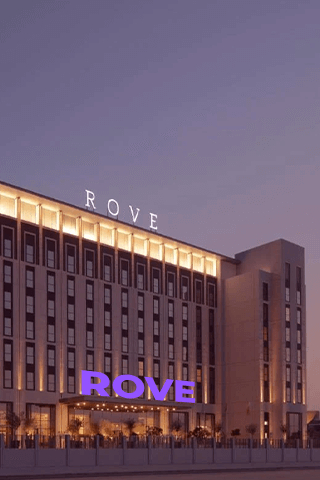
Since NEXA has taken over the optimization of the Rove Hotels website, we've not only seen an increase in qualified traffic but also an increase in conversions. The NEXA team also worked closely with our in-house team during the transition to a new website, which can often be a tricky exercise. Thanks to the team, the transition was incredibly smooth and within a few weeks, we noticed even higher search traffic coming onto the website.
Overall we find the team very responsive and senior management actively involved in the process.

When it came to attracting leads across the MENA region, we were at a loss. We turned to NEXA to assist us in reaching this large target audience.
Needless to say, our expectations were exceeded. NEXA helped us rank in the search engine results, across multiple locations and brought us the highest quality leads and improved sales for Toshiba Printers.

When it came to attracting leads across the MENA region, we were at a loss. We turned to NEXA to assist us in reaching this large target audience.
Needless to say, our expectations were exceeded. NEXA helped us rank in the search engine results, across multiple locations and brought us the highest quality leads and improved sales for Toshiba Printers.

When it came to attracting leads across the MENA region, we were at a loss. We turned to NEXA to assist us in reaching this large target audience.
Needless to say, our expectations were exceeded. NEXA helped us rank in the search engine results, across multiple locations and brought us the highest quality leads and improved sales for Toshiba Printers.

When it came to attracting leads across the MENA region, we were at a loss. We turned to NEXA to assist us in reaching this large target audience.
Needless to say, our expectations were exceeded. NEXA helped us rank in the search engine results, across multiple locations and brought us the highest quality leads and improved sales for Toshiba Printers.
Partners and Awards
 Business Partner
 2025 Winner

 Solutions Partner Program — Elite
 Winner
 Business Partner
 2025 Winner

We have extensive experience in the following industries
 B2B Marketing
 Education
 Automotive
 Healthcare
 Hospitality
 Real Estate
 E-commerce
Free Business Growth Guide
Economies, companies, and the world at large have witnessed massive changes over the last three years.
It’s businesses with the dexterity and agility to shift with the times that stay ahead of the game. At NEXA, we don’t just want your business to survive in ever-evolving markets and business environments. We want you to thrive. NEXA’s latest edition of the Business Growth Guide is designed to show you just how your business can achieve that.
The Business Growth Guide is filled with all the fundamental knowledge you need to orient your current business goals, as well as the latest information about marketing, sales, service, and people.
Put your business ahead with a copy of this valuable, free resource.
Download E-Guide
Start Your Growth Journey with NEXA!
Let's dive into your ideas, achieve your goals with precision and design tailored strategies that fit your needs. We'll work with you to set clear expectations, goals, and metrics.
NEXA HEAD OFFICE
Floor 2, Building 4, Union Business Park, Dubai Investment Park 1, Dubai, UAE
CONTACT DETAILS
+971 52 869 2447
+971 44 329 464
support@digitalnexa.com